As we navigate the travel landscape of February 2026, the rules for flying with electronic cigarettes have become more refined but no less strict. The core answer remains unchanged: Yes, you can take a vape on a plane, but it must be in your carry-on luggage or on your person. It is strictly forbidden to place any device containing a lithium battery in checked baggage.
I am Vape Insider Max. With over a decade of observing the intersection of vaping technology and global regulation, I've seen air travel evolve from complete confusion to the highly digitized, sensor-driven environment of 2026. This guide breaks down exactly how to pass through security without losing your gear.
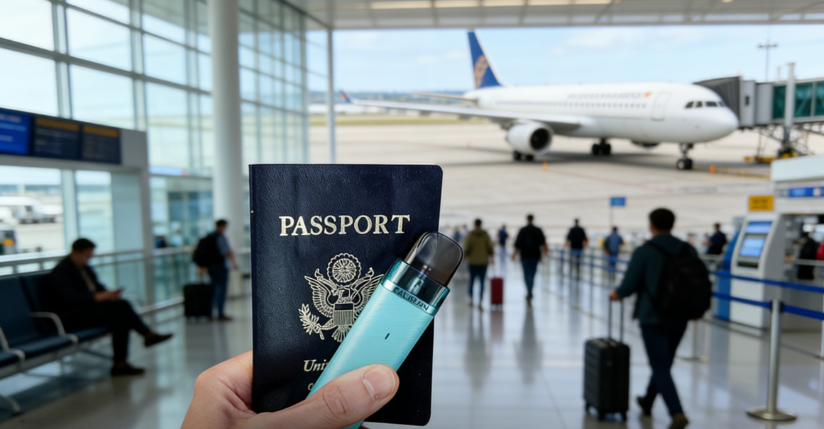
The Technical Mandate: Lithium Batteries & Fire Safety
The primary reason airlines care about your vape isn't the nicotine—it's the power source. In 2026, many high-capacity disposable vapes utilize sophisticated lithium-polymer batteries capable of supporting 20,000+ puffs. While efficient, these batteries pose a risk of thermal runaway if they short-circuit or are damaged.
If a fire occurs in the passenger cabin, the crew can deploy specialized fire containment bags. If a fire starts in the cargo hold (checked bags), it can be catastrophic before it’s even detected. This is why understanding your device's battery capacity explanation is crucial. Most airlines now follow the 100Wh (Watt-hour) limit for lithium batteries; while most vapes fall well under this, carrying a dozen backup 21700 cells might trigger a secondary inspection.
Quick Reference: Where Does It Go?
| Vape Item | Carry-on / Pocket | Checked Baggage | Safety Requirement |
|---|---|---|---|
| Disposable Vapes | ✅ Permitted | ❌ Prohibited | Keep in clear plastic bag |
| Vape Mods (Internal Battery) | ✅ Permitted | ❌ Prohibited | Power device OFF |
| 18650/21700 Batteries | ✅ Permitted | ❌ Prohibited | Must be in plastic cases |
| E-liquid (Bottles) | ✅ Max 100ml | ✅ Permitted | Double-seal against pressure |
TSA Screening in 2026: CT Scanners & New Protocols
Modern airport security in 2026 has transitioned almost entirely to 3D Computed Tomography (CT) scanners. Unlike the old X-ray machines, these allow TSA officers to rotate the image of your bag on their screen. You generally no longer need to remove your vape from your bag, but you should ensure it isn't buried under a tangle of charging cables, which can appear suspicious on the scan.
Note for 2026 Travelers: If you are using "Smart Vapes" with Bluetooth or touchscreens, ensure the device is fully powered down. Some newer scanners can detect active wireless signals, and an "on" device in a bag may lead to a manual search to ensure it won't accidentally activate during the flight.
International Considerations: The Destination Matters
While TSA or airport security focuses on flight safety, the customs officers at your destination focus on legality. As of 2026, the international landscape is more fragmented than ever:
- United Kingdom & Europe: Generally vape-friendly, but strict on the 2ml tank capacity for local sales. Carrying your own 5ml tank is usually fine for personal use.
- Australia: Since the 2024/2025 reforms, you must have a prescription for nicotine. Customs may check your device for nicotine content if you are entering from certain regions.
- Southeast Asia (Thailand/Singapore): Despite some political shifts, vapes are still technically illegal to import. Bringing them into these countries carries a high risk of fines, regardless of airline rules.
Pros & Cons of Traveling with a Vape
Pros
Nicotine Consistency: You aren't forced to use unknown local brands that may have questionable ingredient safety.
Cost Efficiency: Avoiding "tourist trap" prices at airport kiosks or convenience stores abroad.
Reduced Stress: Having your familiar device helps manage the anxiety often associated with long-haul travel.
Cons
Pressure Leaks: Cabin pressure at 35,000 feet will cause e-liquid to expand. If your tank is full, it will leak into your bag.
Security Scrutiny: Carrying large mods or DIY coil kits can lead to delays if an officer isn't familiar with hobbyist gear.
Battery Anxiety: The need to keep devices in carry-on means less space for other essentials.
Analysis of Vaping on the Plane: A 2026 Reality Check
It is worth repeating: Do not vape on the aircraft. By 2026, airlines have installed High-Sensitivity Particulate Sensors in lavatories that can distinguish between steam, tobacco smoke, and VG/PG vapor. A single puff can trigger a silent alarm in the cockpit.
The penalties in 2026 have increased. In many jurisdictions, "vaping on a plane" is now classified as a federal interference with flight crew duties, leading to significant legal repercussions and permanent inclusion on "No-Fly" lists. If the urge is too strong, I recommend using nicotine pouches or tobacco-free snus as a discreet alternative during the flight.
Frequently Asked Questions (FAQ)
Most airlines officially discourage this. Low-quality cables or faulty internal charging circuits in some vapes can overheat. It is safer to use a dedicated, high-quality power bank if you must charge mid-flight.
Store your tank upside down during takeoff and landing. This ensures the air pocket in the tank is positioned over the wick holes, allowing air (rather than juice) to be forced out by the pressure changes.
Inform the airline staff immediately at the check-in counter or gate. It is much better to have your bag pulled and searched on the ground than to cause a mid-air emergency if the battery malfunctions.
